The Profile

The Socio-Economic and Physical Profile of Banayoyo, in fifteen chapters.

Behind the page: the Binnuyog Government Center, from the air.

Banayoyo on one page, to print: the fact sheet

2,381.33 hahectares
7,931people
1,929households
0–207 mElevation
50.52 kmroad network
99%literacy

Bacsayan, Bayoyo, Banayoyo

The Municipality of Banayoyo was originally called “Bacsayan”. How it got its present name “Banayoyo” could be recounted by the following story:

Long time ago, indigenous people of Abra and Mountain Province were looking for a place to settle and found a place at the Western Part of Cordillera Mountain. Lately, they called this place “Bacsayan” which means settlement area.

As time passed, these people (Tinguian and Igorot Tribes) intermarried and it did not take long enough, they formed another tribe. However, both tribes had different dialects. Thus, the result of the intermarriage resulted to one dialect derived from the “Tinguian of Abra” and “Igorot of Cordillera” – born the “Itneg” of the newly formed tribe. The Datu and the council of elders then made their own rules based primarily on the cultures of Abra and Cordillera.

In the southeastern part of the place, there was a big and sturdy tree, which the townfolks called “Bayoyo”. The Datus and the Council of Elders agreed to build a “Dap-ay” (a structure where the leaders meet or gather for the settlement of problems and disputes among its tribal members) and “Pandek” – a storeroom for arms (Aliwa, Kalasag and Pika) and communal kitchen and dining utensils. In this place, they also practice the ritual called “Begnas”, a ritual of 3-day activity and Thanksgiving to “Kabunian”(GOD) after a very productive and fruitful harvest season. The tree called “Bayoyo” was always strong and sturdy following their belief that the tree brought luck to the whole populace.

Due to old age, the tree died and at that time, drought struck the place. Their harvest decreased, famine and hunger were experienced by the people. With the belief that the calamity is caused by the death of the tree, the leaders held a meeting and came up with an agreement to hold another ritual called “sapu” to find out the cause of their painful and tragic experience. Thus, they have discovered that their entire ordeal was due to negligence of some tribal members in giving thanks to “Kabunian” (God). In a long series of exchange of ideas to amend the sad events that they had undergone, the Datus and the Council of Elders decided to change the name of the place “Bacsayan” to “Bayoyo” in remembrance to the strong and sturdy tree and believed that bad lucks will be wiped out by the name “Bayoyo”. The tree somehow is a symbol of unity among all the tribal members under its wide shady branches. It was only during the Spanish Regime that the name “BAYOYO” was changed to “BANAYOYO”.

The tree somehow is a symbol of unity among all the tribal members under its wide shady branches.

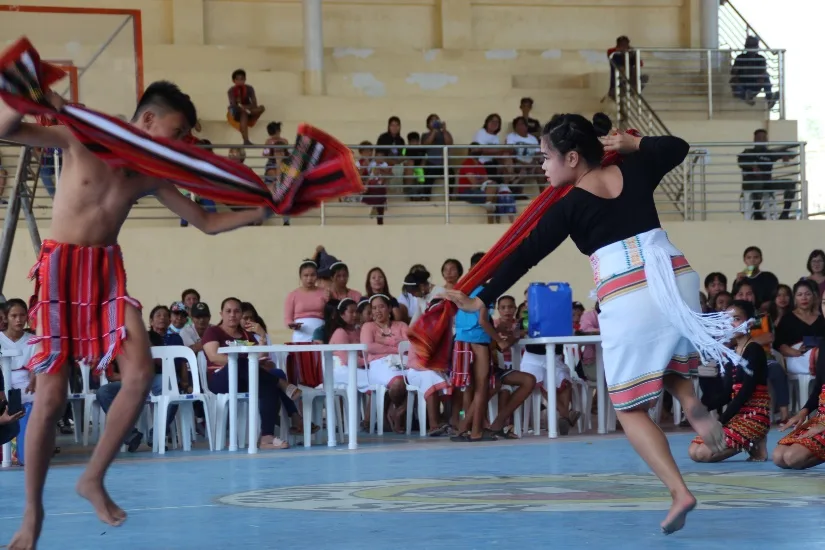
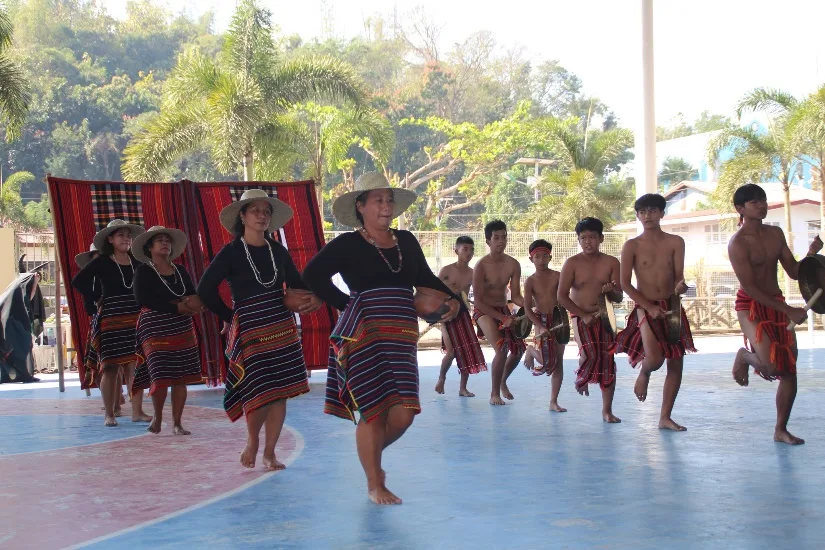
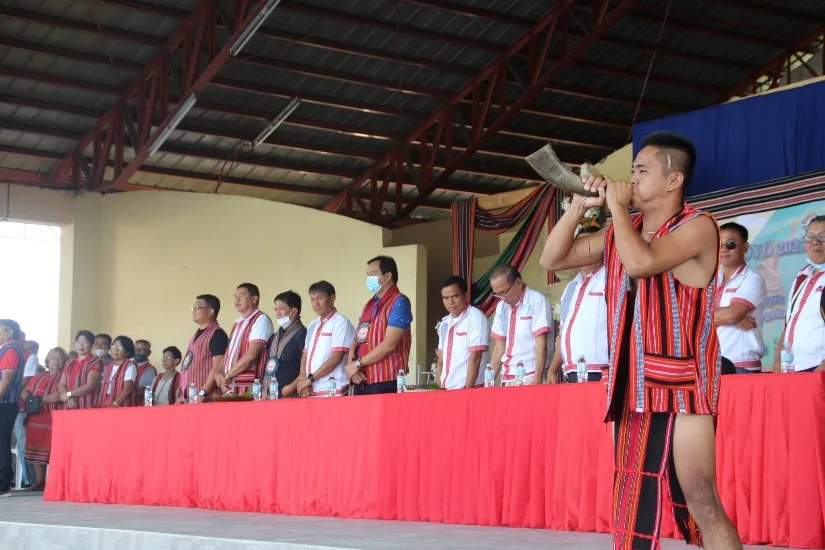
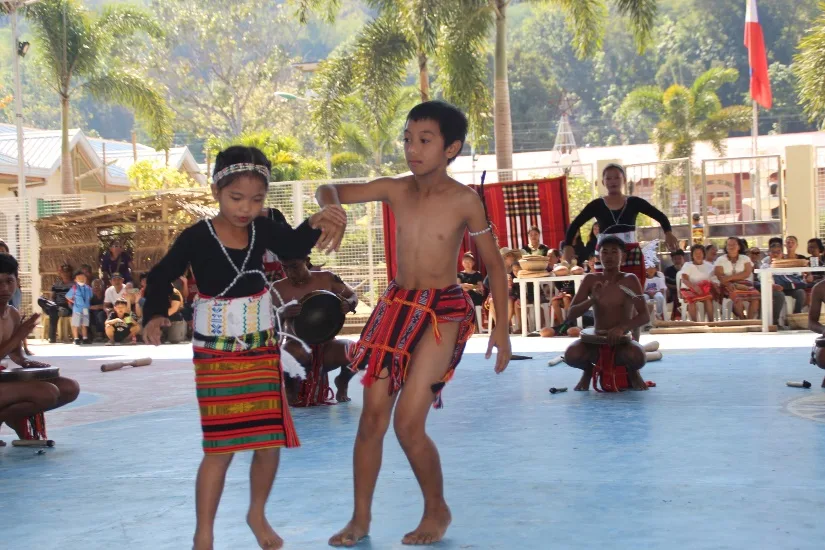
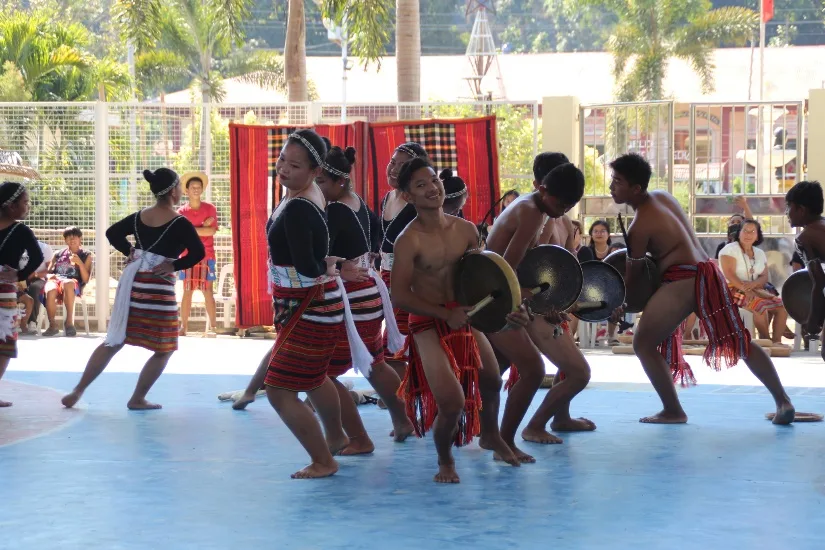
Begnas is still held. It is on the municipality’s calendar of yearly festivities as Begnas di Banayoyo — the thanksgiving to Kabunian that the elders kept at the Dap-ay under the Bayoyo tree, and whose neglect the sapu, held after the tree died and the harvest with it, found at the root of the drought. The tourism plan carries six photographs of it: the covered court, the woven cloth, the gongs. The name of the place changed. The practice did not.
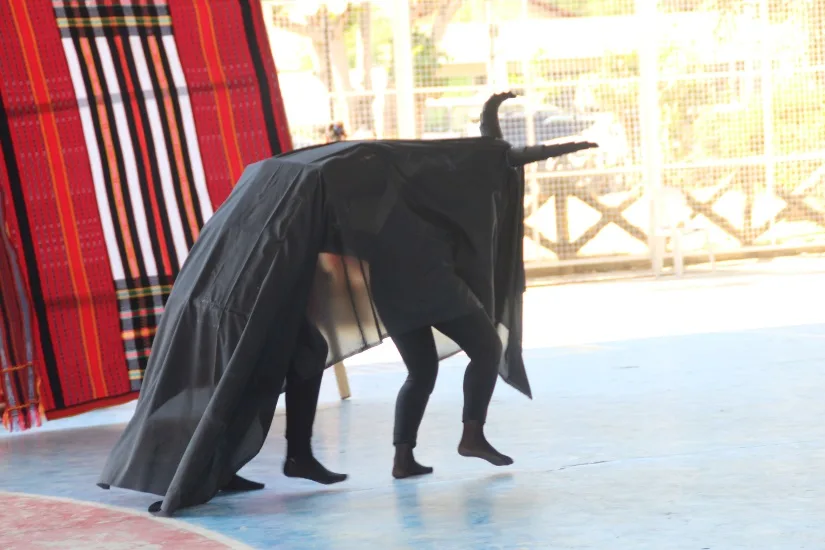
Begnas di Banayoyo. Photographs from the municipal tourism plan.

Founding

Banayoyo was a “Rancheria” or pastureland under the Spanish Regime. But as more people from the highlands of Abra called Tinguians and Igorots from Mountain Province came to settle, it developed into a small community. On April 22, 1907, Banayoyo was still a barrio. Reliable sources indicate that lands existing on the northern part were registered in the local civil registrar of the Municipality of Santiago while on the southern part were part of Candon. The township of the Municipality of Banayoyo recorded on its socio-economic profile is in the year 1908 in transition. On March 5, 1919, Banayoyo was made into a municipality by virtue of Executive Number 84 issued by the Office of the Governor General of the Philippines, Francis Burton Harrison.

The War

During World War II, Banayoyo was once the seat of Guerrilla Outfit, under the command of Major Walter M. Cushing, a fearless American Fighter. The closeness of the residents to the Guerrilla outfit by way of provisions and financial assistance irked the Japanese Army who were then garrisoned at an old Sugar Central in nearby Bucong, a barrio of Candon. Angry patrols of the Japanese Imperial Army burned some barrios of Banayoyo. Barangay Elefante, which was the bivouac area of the elements of “M” Co., 121st Infantry USAFIP NL, suffered the worst atrocities. On October 16, 1944, one half of the barrio was burned and on November 14, 1944, the other half met the same fate. During the same date, the church was not spared nor the Municipal Hall.

Twenty-eight terms

The Local Government Code of 1991 gives autonomy and more power to the Local Government Unit. Thus, representatives from different sectors were given the chance to join in the making and implementation of the different plans and programs of the local government unit.

28 terms, 26 people, 14 photographed.

The Land

  • Banayoyo is located at the western tip of the Cordillera Mountain and one of the interior towns of the province of Ilocos Sur, north of Candon City, South of Santiago and Burgos and west of Lidlidda. It has fourteen (14) Barangays bisected by Naguimba–Cadanglaan River at the center.
  • Flat with slope 0% to 5%
  • One half of the Area of the Town: 100-200+m in altitude
  • Naguimba with 207
  • Bantog Clay
  • Dark grayish Brown Clay
  • Bauang Clay Loam
  • Light brown clay loam

Location and area

2,381.33 has.
Total Area
566.37 has.
Area
22.46 has
Area
Biggest Barangay
Naguimba
Smallest Barangay
Montero

Climate

Dry Season
November to April
Wet Season
May to October
Land classification
ClassificationArea (ha)Stated %Corrected %
Alienable & Disposable (A&D)1,670.1970.1470.14
Forestland (FL)378.6615.1915.9
Protected Area (PA)332.4813.9613.96
Total2,381.3399.29100

Corrections — build spec §9

  • The document states 15.19%. 378.66 / 2,381.33 = 15.90% — a digit transposition. The stated set sums to 99.29%; corrected it sums to 100.00%. Build spec section 9, issue 1.
Existing vs proposed general land use, 2023–2032
ExistingProposedIncrease/ Decrease
Forest and Forest Land
ProtectionMilitary and Naval Reservation (PNP Reclamation Area)
Watershed
NIPAS - Strict Protection Zone332.48332.480
Forestland378.66378.660
ProductionProduction Forest696.78696.780
Agriculture
ProtectionSAFDZ372.32340.51-31.81
ProductionNon-SAFDZ388.03371.07-16.96
Tourism0
Residential83.97105.2021.23
Socialized Housing03.193.19
Commercial7.0118.9811.97
Industrial0.270.270
Institutional10.3310.330
Parks and Recreation2.552.550
Cemetery/ Memorial Park2.612.950.34
Utilities (Landfill/ Dumpsite, Cell sites)33.2533.250
Infrastructure (Roads)50.5262.5612.04
TOTAL2,381.332,381.33
Source: MPDC Office

This table reconciles: both columns total 2,381.33 ha.

Existing vs proposed urban land use, 2023–2032
ExistingProposedIncrease/ Decrease
Residential12.7015.953.25
Socialized Housing03.03.0
Commercial0.9062.912
Institutional3.463.460
AgriculturalSAFDZ000
Non- SAFDZ (Production)36.00433.75-19.61
Utilities
Cell Site.08.080
Agro- Forest18.8818.880
Parks and Recreation.63.630
Cemetery.60.600
Rivers and Creeks2.272.270
Sicialized Housing030
Roads and Bridges6.576.570
Total85.1085.10

Corrections — build spec §9

  • Non-SAFDZ (Production) shows an increase/decrease of −19.61, but 33.75 − 36.004 = −2.254. Build spec section 9, issue 7.
  • "Socialized Housing" appears twice — once at 0 → 3.0 and again as "Sicialized Housing" at 0 → 3. A duplicate row and a typo. Section 9, issue 9.
  • The column does not reconcile to the stated total of 85.10. Section 9, issue 8.

Map sheets 12

All thirty sheets

The People

Demography

7,931
**Total Population (PSA 2020)
1,929
**Number of Households (PSA 2020)
68.15 %
Ilocano
30.00%
Itneg/Tinguian/Bago
1.85%
Mixed/Others
55.90%
Roman Catholic
44.10%
Protestants/others
59.37%
Employed
40.63%
Un-employed

Livelihood

Agriculture

2, 110.08 MT
Rice Production
1,051.776 MT
Projected Consumption
1,058.304 MT
Surplus
150%
Food Sifficiency
223
Tobacco Farmers
Primary Crops first season
Rice
Second season
Tobacco/ Corn/ Peanut

The public market

884.95 sqm
Area
1,646 sqm
Floor Area
8 stall
Ground Floor
15 stall
Second Floor
336 sqm
Dry Market
272 sqm
Area
471 sqm
Area
12 stalls/ tables
Vegetables/Fruits Section
12 stalls/ tables
Beef/ Pork/ Chicken Section
12 stalls/ tables
Fish/ Processed Food Section
270 sqm
Area
9
Number of Stalls

Business establishments

4
Grocery/ Convenience Store
103
Sari- Sari Store
6
Agri- Industrial (rice mills, agri-trading)
2
Poultry Products Production
12
Hollow Blocks Making & Steel Works)
3
Wholesale, Retail and Trade
51
Services (Shops, Eateries, etc)
4
Gas Station

Education

2
Pre-school (Private)
11
Child Development Centers
7
Elementary and Primary School
1
High School (Junior and Senior)
99%
Literacy Rate

Health and Nutrition

Vital statistics

10/1000 population (77)
Crude Birth Rate (CBR)
5/1000 population (44)
Crude Death Rate (CDR)
0
Fetal Death Rate (FDR)
0
Infant Death Rate (IDR)
0
Maternal Death Rate (MDR)
Leading Causes of Mortality
Pneumonia, Myocardial infarction, Carcinoma (all forms), Cerebrovascular accident, Senile Debility, Anemia (severe), Brain Injuries, Chronic Renal Disease, Chronic Liver Disease
Leading Causes of Morbidity
Acute Respiratory Infection (ARI), Hypertension, Skin Diseases, Wounds (all forms), Musculoskeletal Spasm, Gastrointestinal Illness, Urinary Tract Infection (UTI), Dental Illnesses, Headache (all forms), Diabetes Mellitus

Facilities

8
Barangay Health Station
1
Municipal Health Center
1
Dental Clinic
1
Mini-Laboratory

Personnel

1
MHO
1
Medical Technologist
1
Sanitary Inspector
1 Permanent, 1 Contractual
Ambulance Driver
1 (contractual)
Records Officer
1
Dentist
34
Brgy. Health Workers
14
Brgy. Nutrition Scholars
1
Health Education & Promotion Officer I
Nurse
5 (2 Permanent, 1 Contractual under DOH, 2 Job Order)
Midwife
5 (2 Permanent, under DOH, 3 Job Order)

Social Welfare

12
Child Development Centers
12
Day Care Workers
201
Day Care Enrollees
1,334
Senior Citizens
164
4Ps Beneficiaries
171
Persons with Disabilities
122
Solo Parent
Services
Referrals, Self-employment Assistance,

Parks, playgrounds and sport

15
Basketball Court (MPP)

Peace and Safety

Protective services

25 PMCO, 4 NUP
Police Personnel
1:319
Police Population Ratio
98
Barangay Tanods
General Situation
Peaceful

Fire protection

8
BFP Personnel
1:200
Fire Personnel Population Ratio
1 unit
Fire Truck

Infrastructure

Roads and bridges

99% Concrete
General Situation
599.5 linear meter
Bridges
.1507 km/100 sq km
Urban
3.5702km/100 sq km
Rural
National Road
5.18 kms, 10.25% of the total road network
Provincial Road
5.15 kms, 10.19% of the total road network
Municipal Road
1.256 kms, 2.49% of the total road network
Barangay Roads
38.934 kms, 77.07% of the total road network

Utilities and communications

1:5
Cellphones
14
Number of Energized Barangay
Level 1
Common Water Source
100%
Potable Water
Drainage and Sewerage
Natural drainage, Rivers and
Media Facilities
Radio/TV/Social Media (Facebook, Twitter, YouTube, Tik-Tok, Instagram)
Broadband Services
Smart, Globe, Converge, DITO, Bonnet
Means of Transportation
SUV/ UV/ Motorcycle/ Motorcycle with Sidecar/ eBikes
Machinery, trucks and heavy equipment
2Road Roller1unit
3Backhoe2unit
4Dumptruck1unit
5Boom Truck1unit
6MPV3unit
7Barangay Trucks14unit
8Ambulance1unit
9PTV1unit
10Motorcycle3unit
11Motorcycle w/ Sidecar3unit
12Rescue Vehicle1unit
13Red Adventure (SUV)1unit
14Montero (SUV)1unit

Environment

Sanitary landfill

19.1465 has.
Area
0.50 has.
Area
Location
Bagbag, Bagbagotot
Location
Bagbagotot

Materials recovery

2 unit
Dump truck
1 unit
Backhoe
1 unit
Garbage Compactor
1 unit
Plastic Shreder- RW7 7.5h
1 unit
Bio Waste Shredder
1 unit
Dicorticator- DM 5h
1 unit
Bio Reactor
1 unit
Bottle Crusher
1 unit
Motor Mixer
1 unit
Incinerator (High Thermal Decomposition Machine)

Cemeteries

1.08 has
Elefante
0.85 ha.
Pila
0.602 ha.
Poblacion
0.50 ha.
Banbanaal
0.50 ha.
Bay-asan

Map sheets 8

All thirty sheets

Risk

  • -Bagbagotot, Banbanaal, Bisangol, Cadanglaan, Casilagan Norte, Casilagan Sur, Elefante, Lintic, Lopez, Montero, Naguimba, and Poblacion generally exhibit a moderate flood risk profile.
  • -Cadanglaan presents a higher flood risk with an exposure score of 2
  • -Naguimba stands out with a heightened exposure of 4 for landslide, indicating an increased vulnerability compared to other barangays..
Likelihood × severity
Frequent (1-3 Years)62418126
Moderate (4-10 Years)52015105
Occasional Slight Chance (11-30 Years)4161284
Improbable (31-100 Years)312963
Rare (101-200 Years)28642
Very Rare (>200 Years)14321

Income and expenditure

These figures are not published. 2025 income is PHP 93,432,547.67 against expenditure of PHP 420,476,019.20; 2024 income is PHP 456,676,429.58 against expenditure of PHP 74,282,469.99. The pattern suggests the expenditure row is shifted one year against income. Confirm with the Municipal Accountant before this table goes live — build spec section 9, issue 6.

Map sheets 10

All thirty sheets

Direction

An ecologically balanced agri-commercial and cultural hub With empowered, unified and God-loving citizenry.

Mission

  • Promotion of agricultural development.
  • Preservation of natural resources and development of eco-cultural tourism potentials.
  • Promote total human development.
  • Exercise a governance characterized by strong political will and focus.
  • Enhance human resource productivity and efficiency.
  • Promote and preserve customs and traditions.
  • Strengthen the spirit of “Binnuyog”

Goals

  • Agri- commercial Center of Upland Municipalities;
  • Enhance productivity and ecologically sound technology; and
  • Sulong Turismo, Tungo sa Progreso!

Objectives

  • Increase agricultural productivity by increasing the productive land by 30% within 3 years;
  • Improve ease of doing business in the locality;
  • Increase Commercial area by zoning both sides of the national road;
  • Develop Possible Tourism Potential to increase economic activity; and
  • Increase employment rate by 2% yearly
  • Establish Soya Production Center as Alternative to Banana Otop.
  • Increase raw supply of Banana

Strategies

  • Gaining more incentive for those doing business in the locality;
  • Strictly enforce LIIC;
  • More financial support to farmers;
  • More support to small business by giving Bookkeeping Trainings and Business Management;
  • Soft loans to micro business;
  • Enforce Anti-Red Tape Law RA 9485;
  • Improve transportation networks such as roads to enhance connectivity with outside markets;
  • Increase price margin by 25% annually;
  • Increase production of raw materials for the OTOP by 10% annually;
  • Train at least five OTOP producers annually;
  • Assist entrepreneurs in marketing their products;
  • Promote community- based tourism initiatives that empower local communities;
  • Participate in trade fairs, exhibitions, and other events; and

Policies

  • Amend LIIC to adopt for the existing situation of Business Activity in the Municipality
  • Financial And Marketing Support to micro-Enterprises
  • Continuing program to Farmers “ATEP”
  • Legislate Market Day

Investment programme

  • Construction of Trade Center
  • Construction of Agri-Ware House
  • Establishment/Construction of Transport Terminal
  • Construction/Opening of FM Road interconnecting Municipalities (Adjoining)
  • Financial Assistance in Micro-Business
  • ATEP to Farmers every release of RA 7171 shares
  • OTOP Display Center
  • Potable Water System Project
  • One Town One Product (OTOP) Production and Processing Center (Banana Products)
  • Alternate One Town One Product (OTOP) Production and Processing Center (Soya Beans)
  • Development of Tourism Potentials
  1. Alexander G. Galanga, Municipal Mayor, 2025 to Present.

    Alexander G. Galanga

    2025 to Present

    Municipal Mayor

  2. Virgilio G. Galanga, Municipal Mayor, 2016 - 2025.

    Virgilio G. Galanga

    2016 - 2025

    Municipal Mayor

  3. Severino P. Galanga, Municipal Mayor, 2007 - 2016.

    Severino P. Galanga

    2007 - 2016

    Municipal Mayor

  4. Elena P. Sorio, Municipal Mayor, 2004 – 2007.

    Elena P. Sorio

    2004 – 2007

    Municipal Mayor

  5. Jose M. Sorio, Jr., Municipal Mayor, 1993 – 2004.

    Jose M. Sorio, Jr.

    1993 – 2004

    Municipal Mayor

  6. Nelson F. Galang, Municipal Mayor, 1992 – 1993.

    Nelson F. Galang

    1992 – 1993

    Municipal Mayor

  7. Federico Vivencio, Municipal Mayor, 1992.

    Federico Vivencio

    1992

    Municipal Mayor

  8. Marcelo de Peralta, Municipal Mayor, 1986 – 1988.

    Marcelo de Peralta

    1986 – 1988

    Municipal Mayor

  9. Ciriaco Galang

    1970 – 1985

    Municipal Mayor

  10. Federico Mangugan, Municipal Mayor, 1967 – 1970.

    Federico Mangugan

    1967 – 1970

    Municipal Mayor

  11. Ciriaco Galang, Municipal Mayor, 1962 – 1966.

    Ciriaco Galang

    1962 – 1966

    Municipal Mayor

  12. Jose Sorio, Sr., Municipal Mayor, 1958 – 1961.

    Jose Sorio, Sr.

    1958 – 1961

    Municipal Mayor

  13. Francisco Balingatan, Municipal Mayor, 1954 – 1957.

    Francisco Balingatan

    1954 – 1957

    Municipal Mayor

  14. Jose Sorio, Sr., Municipal Mayor, 1951 – 1954.

    Jose Sorio, Sr.

    1951 – 1954

    Municipal Mayor

  15. Jose Llaneza, Municipal Mayor, 1947 – 1950.

    Jose Llaneza

    1947 – 1950

    Municipal Mayor

  16. Paulo Gaspar

    1941

    Municipal Mayor

  17. Serafin dela Cruz

    —

    Municipal Mayor

  18. Lupo Gacusana

    —

    Municipal Mayor

  19. Catalino Magsi

    —

    Municipal Mayor

  20. Luis Gaspar

    1929

    Municipal Mayor

  21. Joseph Felix

    —

    Municipal Mayor

  22. Thomas Urbanes

    1928

    Municipal President

  23. Barrido Piscala

    —

    Municipal President

  24. Baw-ing Infiel

    —

    Municipal President

  25. Manog Infiel

    —

    Municipal President

  26. Segundo Urbanes

    —

    Municipal President

  27. Macliing Infiel

    —

    Municipal President

  28. Cosme Urbanes

    1913

    Municipal President